
Your work keeps going.
The generator mostly doesn't.
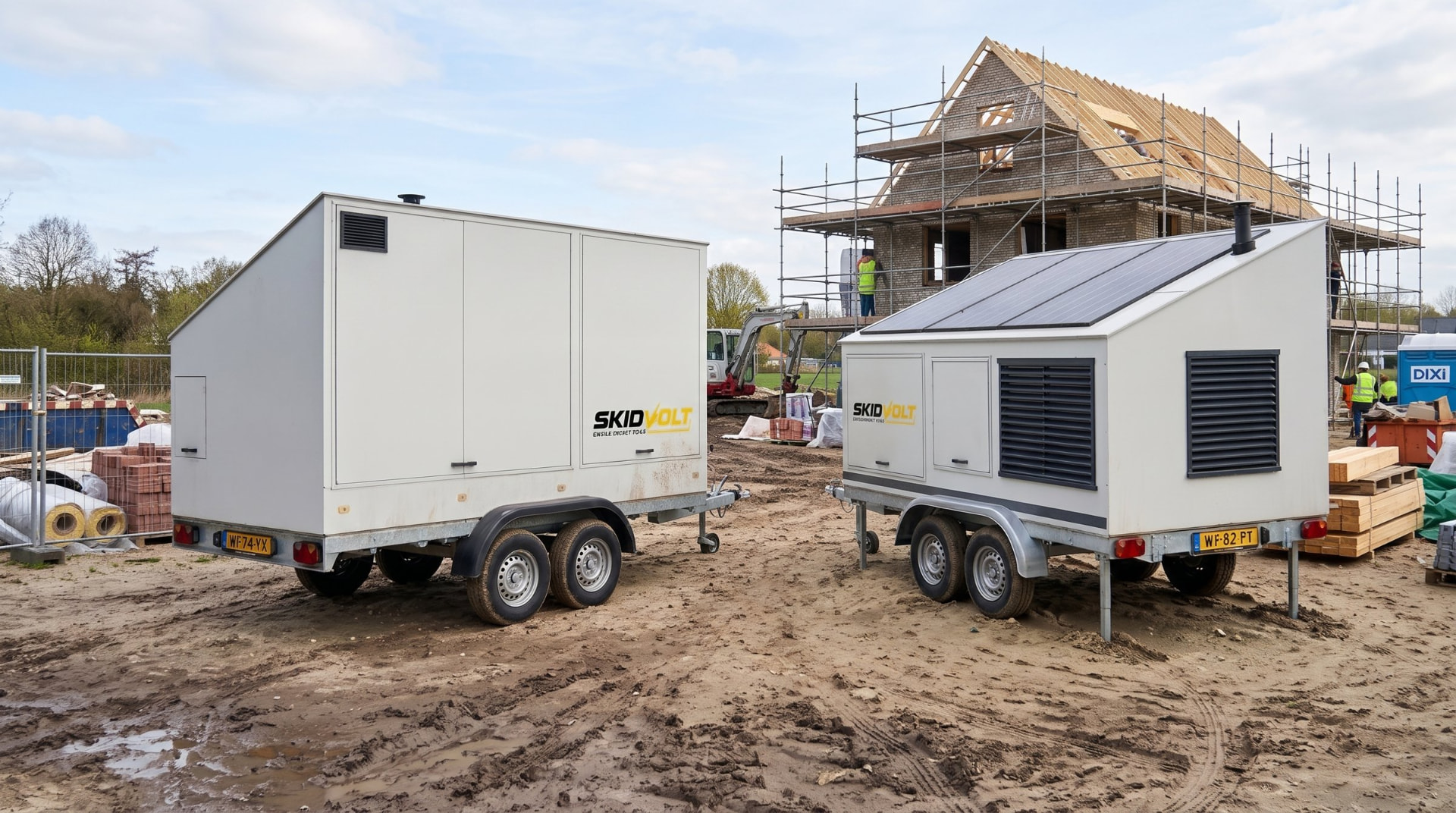
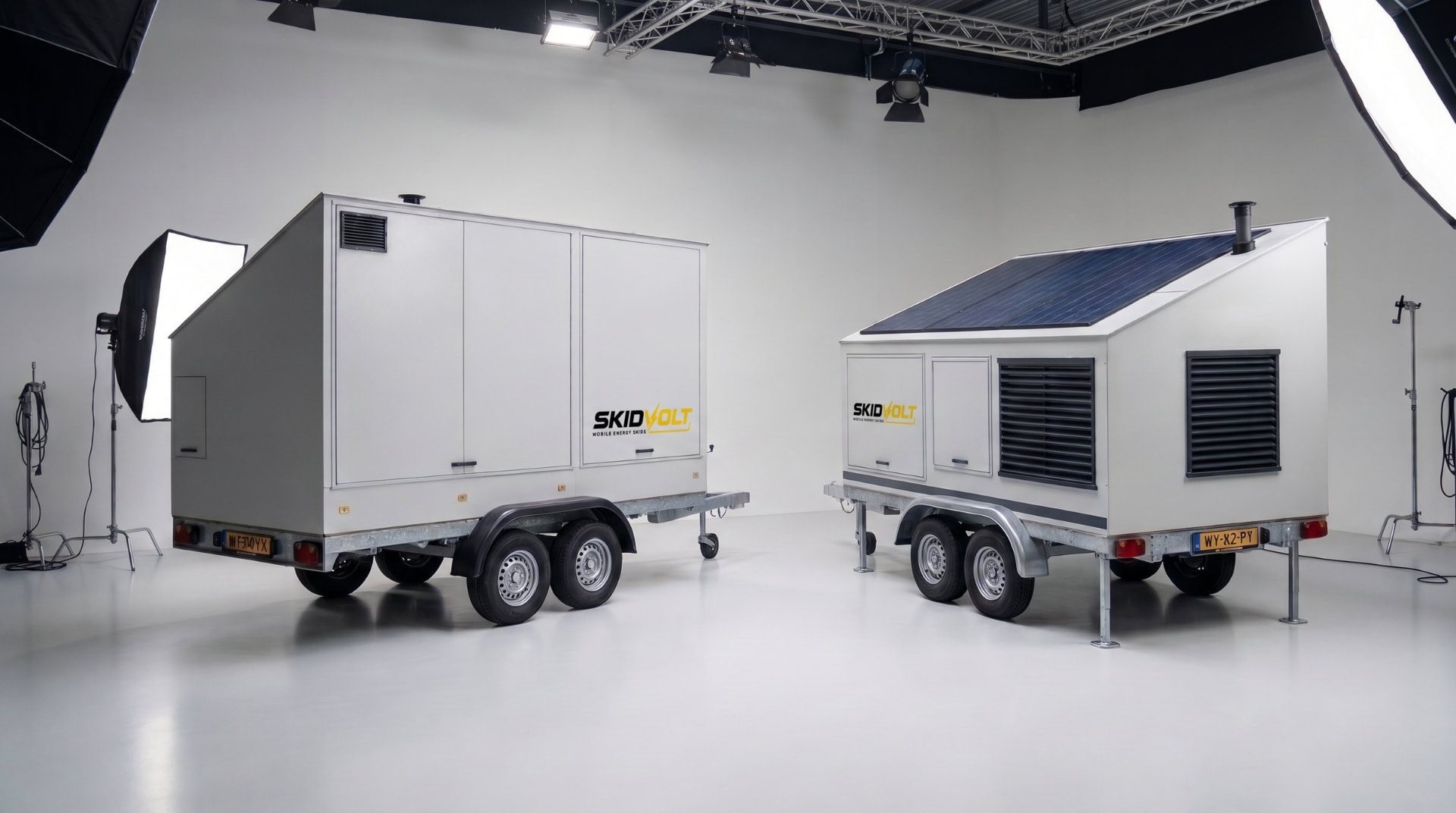
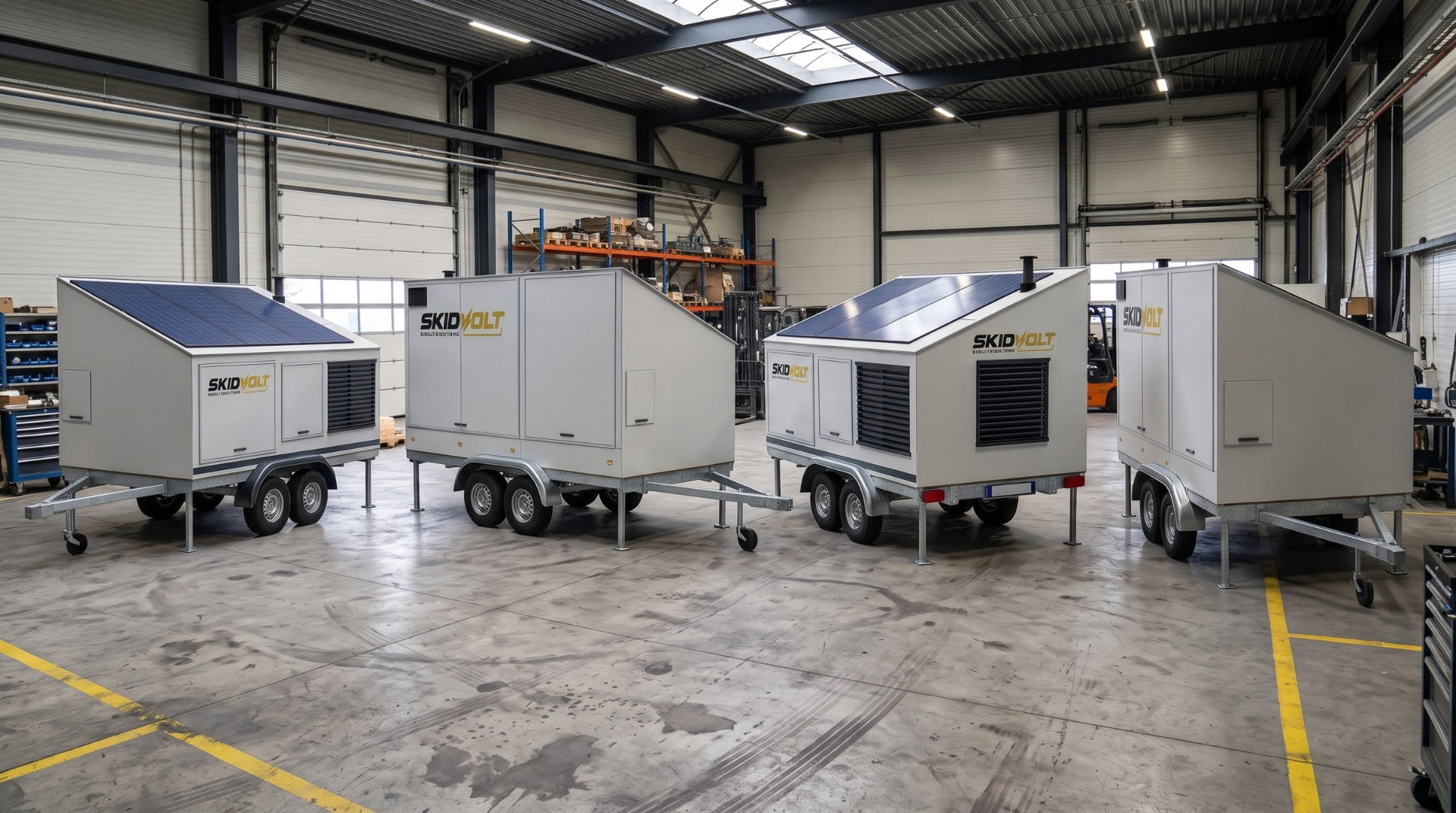
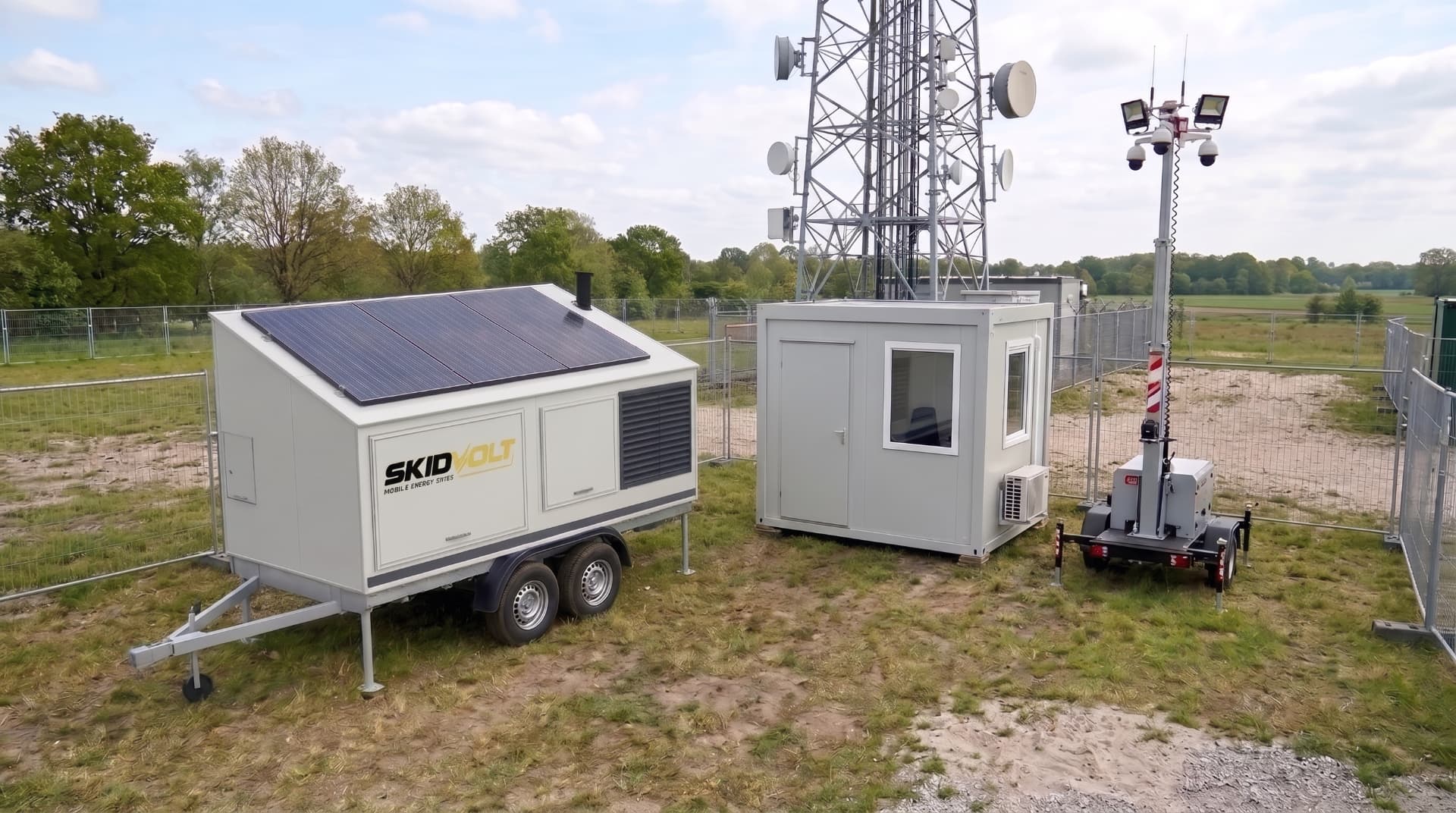
Skidvolt is a hybrid power unit on a trailer. Everything on your site runs on the battery. A small generator only starts to recharge, around 7 hours a day, and then switches itself off.
- Power20 kW three-phase
- Battery32 or 64 kWh LiFePO4
- TransportUnder 2,000 kg, BE licence
- FuelHVO100 only
An ordinary generator runs day and night, even when only the site cabin is on. A Skidvolt delivers the same power from a battery. The generator only starts to recharge. So less fuel, less noise and a week without having to look after it.
- 17 hoursa day of silence. The generator is off.
- Approx. 40%less fuel than a generator running day and night.
- 92%less CO2, because it runs on HVO100 only.
- 1 weekor longer on site without refuelling or a visit.
Our worked example: 220 working days, approx. 100 kWh per day
Think of a hybrid car. Quiet on the battery, the engine only when needed.
Power tools, a hoist and a mini crane during the day. An electric mini excavator on the charger at night. This is what the unit does in 24 hours on an average construction site.
On the battery. No engine noise, no exhaust fumes on your site.
Generator on, at a healthy load, to recharge.
Move over the bar to follow the day. Our worked example, for guidance. Actual use depends on consumption, weather and season.
Power tools, the hoist and the mini crane run on the battery. Solar charges from 08:00.
- 00:00 to 05:00, the battery supplies the power.
- 05:00 to 07:00, the generator runs.
- 07:00 to 12:00, the battery supplies the power.
- 12:00 to 14:00, the generator runs.
- 14:00 to 19:00, the battery supplies the power.
- 19:00 to 22:00, the generator runs.
- 22:00 to 24:00, the battery supplies the power.
- 08:00 to 17:00, solar charges the battery.
Hybrid
The battery supplies the power. The generator starts when the battery runs low, recharges and stops.
Always full
The generator keeps the battery full, so the whole reserve is ready the moment you need it.
Zero emission
Battery and solar only. Charge beforehand at your premises. Enough for a quiet day, night work or a city centre.
 01 / Battery
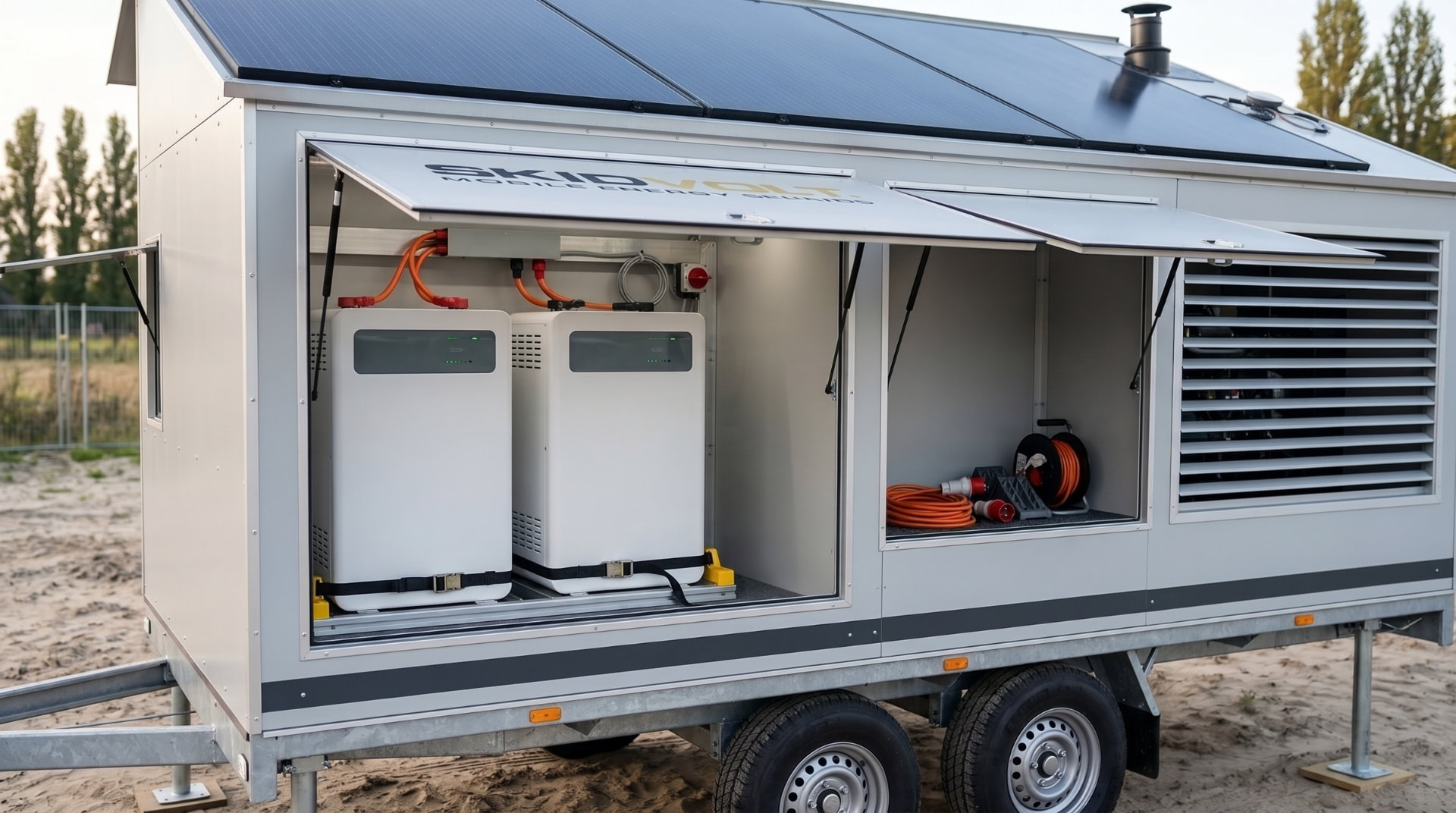
The battery does the work.
Everything you plug in runs on the battery. Quiet, and with no emissions where people work.
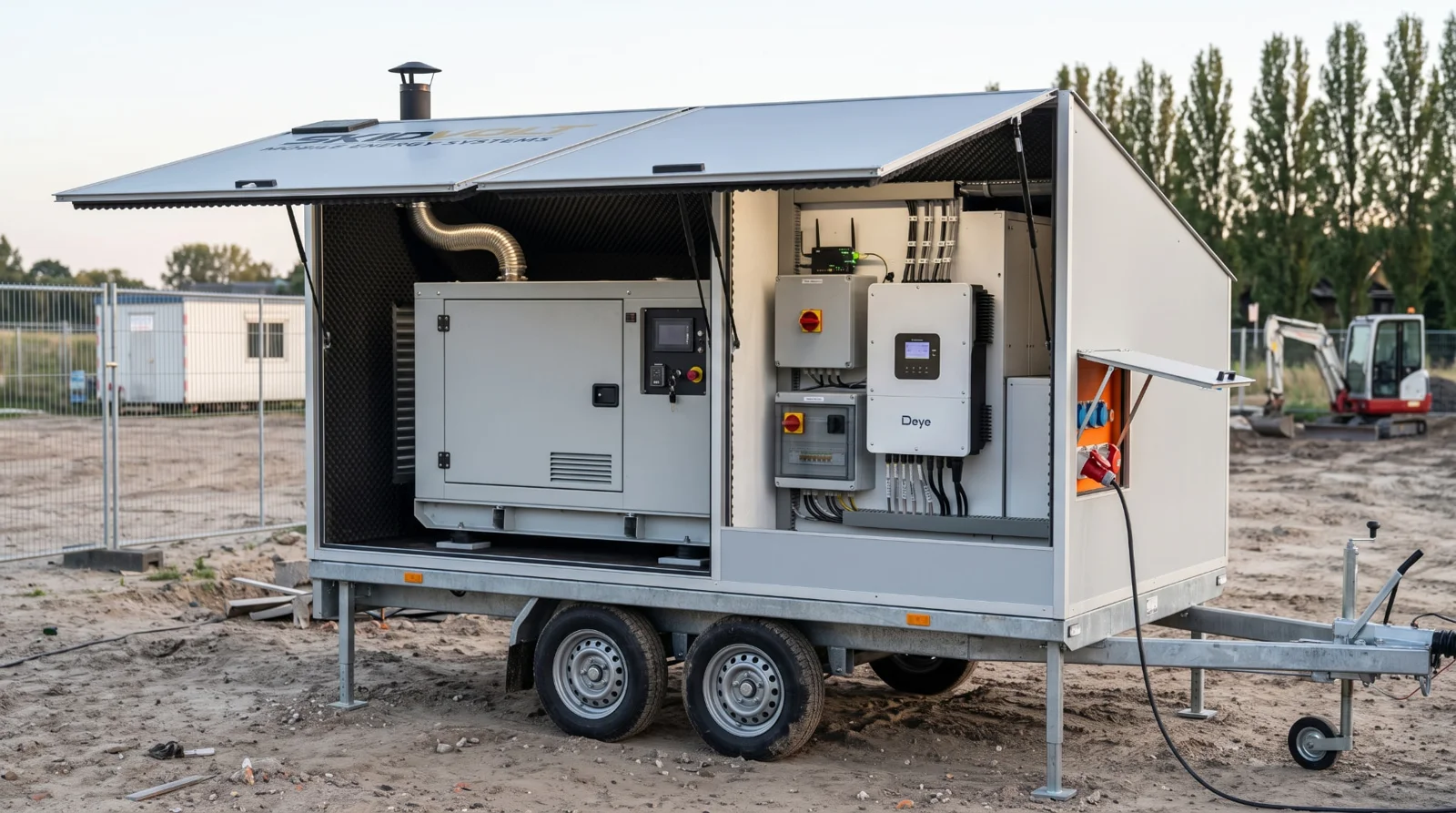
02 / Generator The generator recharges.
When the battery runs low, the generator starts, recharges and switches itself off. It runs on HVO100 only, biodiesel made from residual and waste fats.
03 / Solar The roof helps out.
Three solar panels recharge the battery during the day, with no fuel costs.
04 / Linking Need more? Put them side by side.
Link three Skidvolts and you have three times the battery, with one generator charging. A second only starts when demand rises. If one fails, another takes over.
Open the hatches.
No exotic technology. A battery, an inverter and a generator, with battery and inverter from one brand, on a trailer your van can tow.
A generator that runs well, or not at all.
Sound-insulated industrial generator that starts and stops automatically. Because it only runs to recharge, it runs at a healthy load. A generator idling at low load all night builds up deposits in the engine.
The same unit. One battery pack or two.
Values are indicative. Drawings and the full technical description are available on request.
| Specification | SKID-32 | SKID-64 |
|---|---|---|
| Battery | 32 kWh LiFePO4, from Deye | 64 kWh LiFePO4, from Deye. Two removable 32 kWh packs, approx. 58 kWh usable |
| Inverter | 20 kW three-phase, from Deye | 20 kW three-phase, from Deye |
| Connections | CEE 400 V and 230 V, with manual bypass | CEE 400 V and 230 V, with manual bypass |
| Generator | Sound-insulated industrial generator, HVO100 only, starts and stops automatically | Sound-insulated industrial generator, HVO100 only, starts and stops automatically |
| Solar panels | 3 as standard | 3 as standard |
| Autonomy | To follow | Approx. 7 days at 50 kWh per day |
| Body | 3000 x 1800 mm, approx. 2.5 m high | 3000 x 1800 mm, approx. 2.5 m high |
| Trailer | Tandem axle up to 2,000 kg, BE licence | Tandem axle up to 2,000 kg, BE licence |
| Transport | No ADR certificate needed | ADR certificate needed with both packs on board |
| Monitoring | 4G, via the EMS portal at fleet.skidvolt.nl | 4G, via the EMS portal at fleet.skidvolt.nl |
All three have their place.
What each of the three can and cannot do at a site without a grid connection.
Generator only
Battery unit only
A Skidvolt
Need hundreds of kilowatts, for a tower crane or a main stage? Then a large rental company or a grid connection is a better fit, and we will tell you so. Read the full comparison
Wherever the power must not stop.
Six types of work where the grid connection comes too late, is too small or simply isn't there.
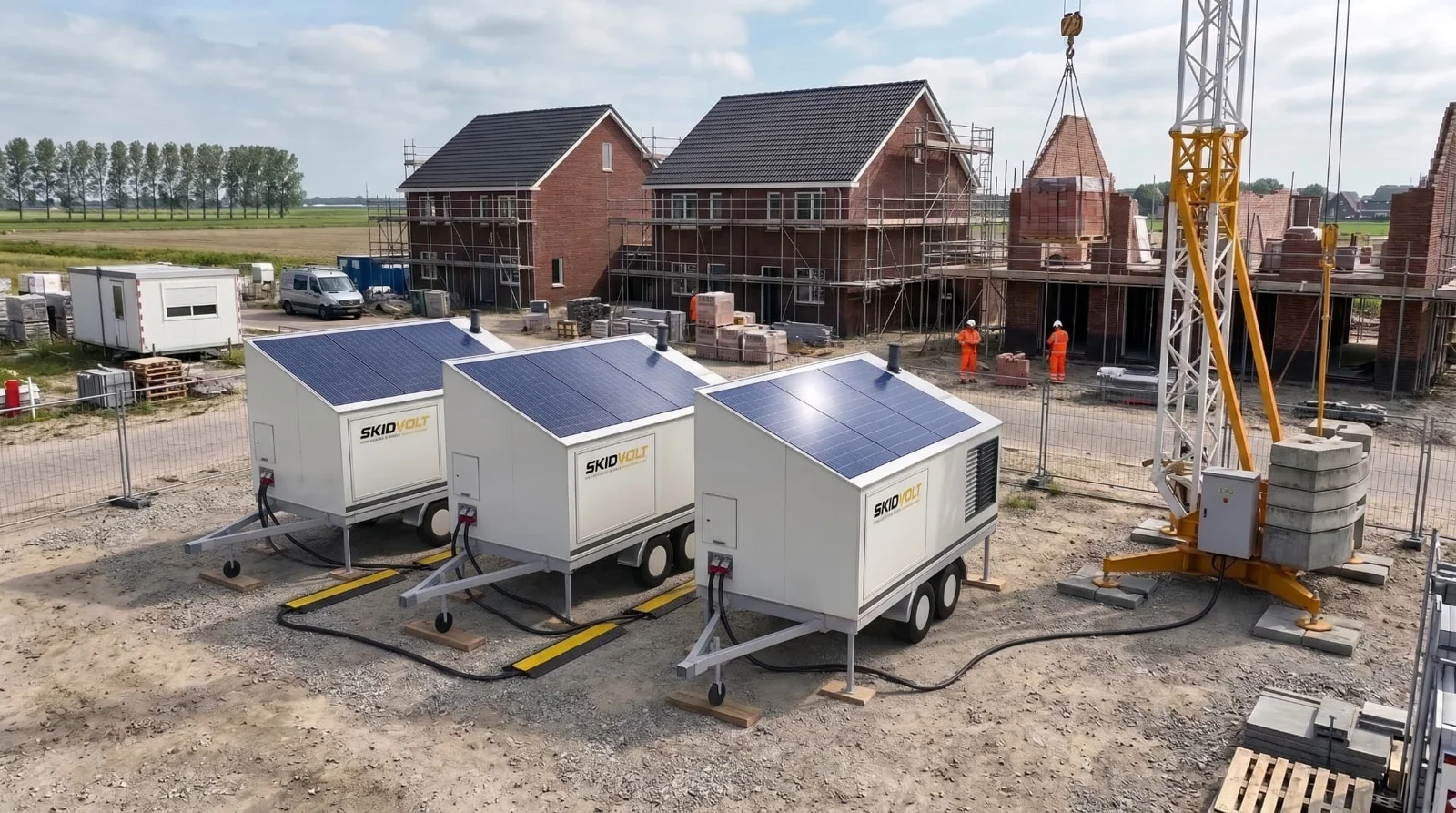
Construction
Power on day one, even when the site connection arrives late.
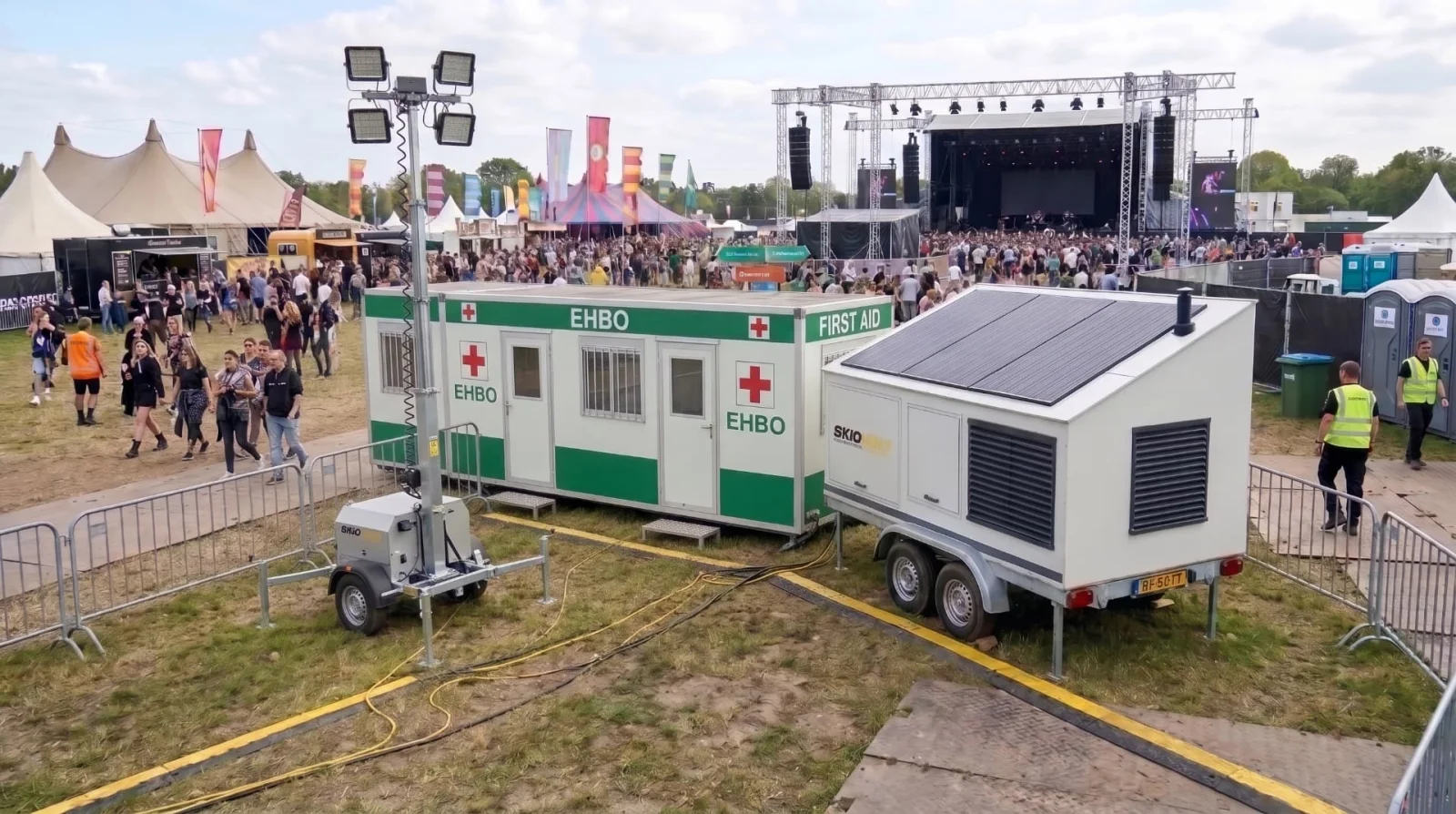
02Events
Power that follows demand. Your guests hear nothing.
 03
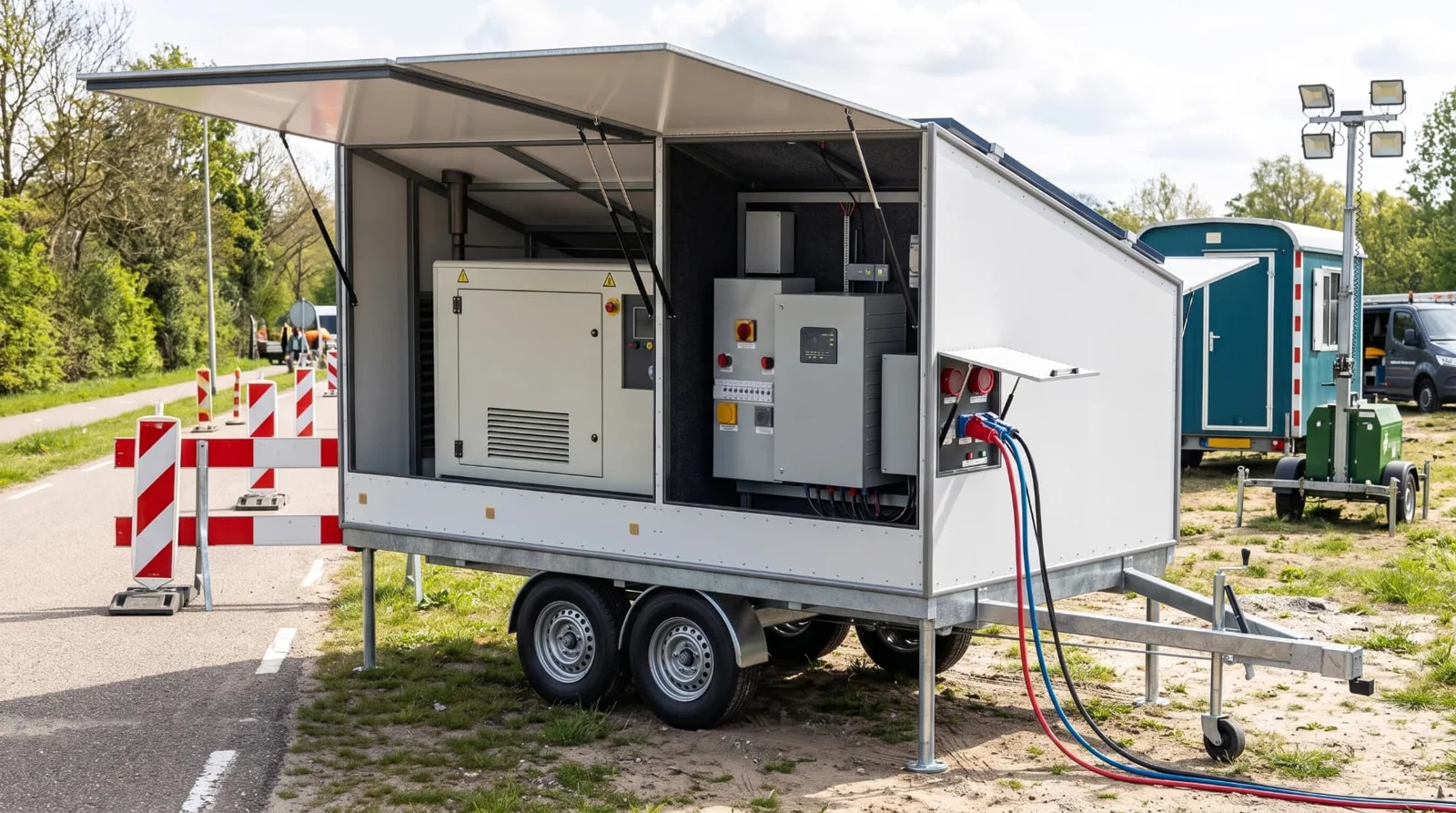
Infrastructure and roads
A week by the roadside without refuelling.
 04
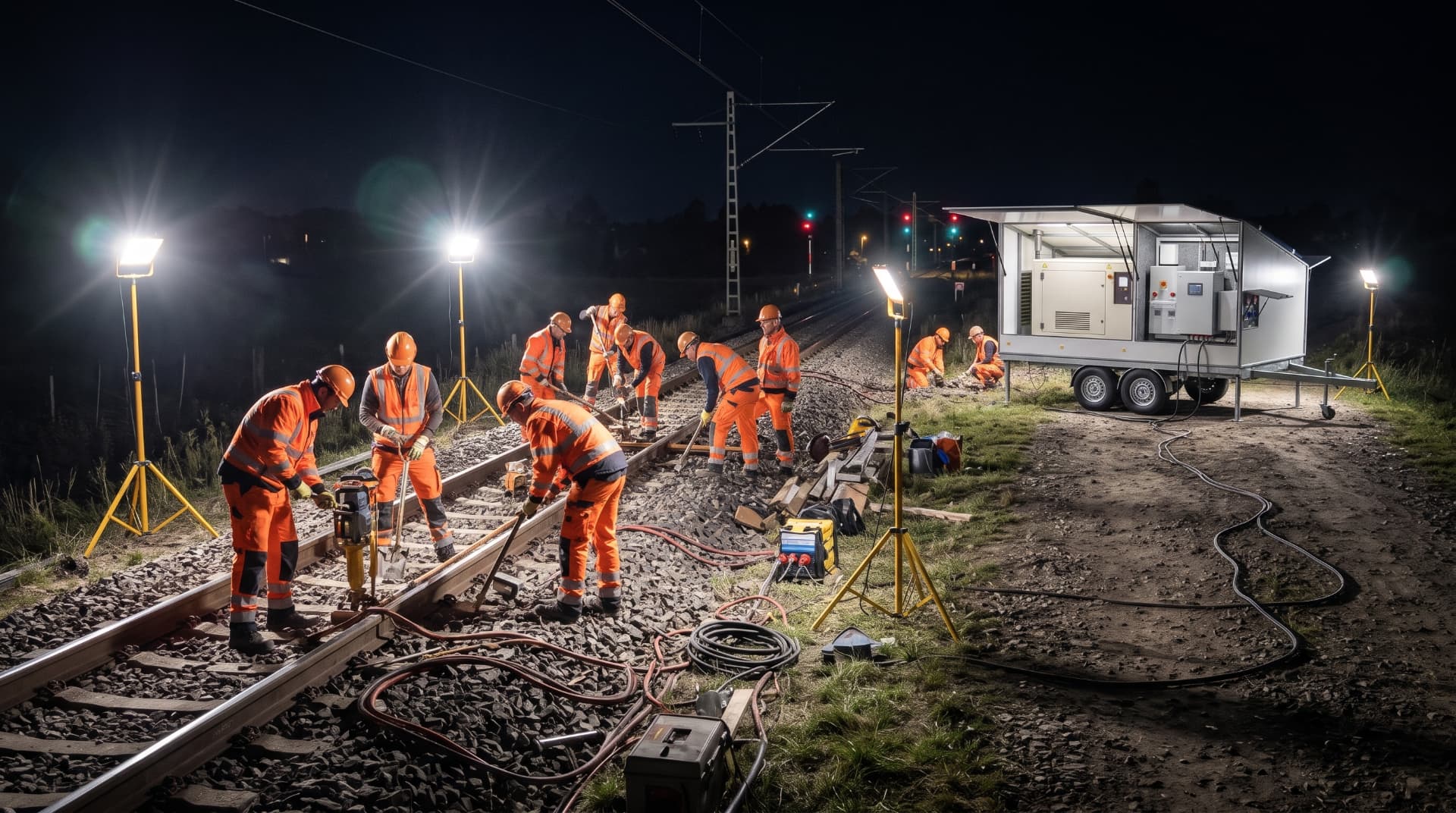
Rail
Quiet night work, zero emission when required.
 05
Grid congestion
Up to 20 kW extra per unit alongside your existing connection.
 06
Maintenance and service
A week or longer on site without a visit.
Same day rate. Around 80 euros a day less on fuel.
We compare renting with renting and buying with buying. If you rent a Skidvolt instead of a generator, the day rate is the same. What changes is the fuel bill and the refuelling.
If you buy one, it costs approx. € 6,800 a year less than your own generator, purchase included. A generator is worn out after about 5 years. A Skidvolt lasts 10 years.
Indicative, excluding VAT. Diesel € 2.00 and HVO100 € 2.38 per litre (wholesale list price, October 2026). A 20 kVA generator uses approx. 2.4 litres per hour on average. Refuelling a rented generator: approx. € 43.80 per day in surcharges and call-out costs. CO2 factors: co2emissiefactoren.nl 2026.
Based on our worked example of approx. 100 kWh per day. Your quote shows the figures for your work.
Calculate it for my work Between two jobs, it works at your premises.
The weekend, the summer shutdown, the weeks between two projects. A rented generator goes back. This one you connect to your building, and it keeps earning.
- 01Stores cheap power
Your own solar power or low-tariff power, saved for later.
- 02Shaves peaks
You stay within your connection. Sometimes it avoids a grid upgrade.
- 03Is your backup power
If the grid fails, your business keeps running.
- Returns€ 1,500 to € 3,000 a year
Roughly. An installer connects it to your building.
And if it stops?
Every buyer asks. Here is the answer, up front.
- Step 1Monitoring via 4G
We see it.
Every unit reports in via 4G. You hear from us before the tank is empty, not after.
- Step 2Within 4 working hours
We take action.
We call you within 4 working hours and fix it remotely or come to your site.
- Step 3Within 24 hours
You have power again.
If that does not work, you get a replacement Skidvolt until yours is running again.
Manual bypass
If the controls fail, you switch to bypass by hand and the generator keeps supplying power.
We do the maintenance
We plan it and carry it out. You don't need to keep track of anything.
Every kWh and every litre recorded
A usage report per project, ready for your CO2 reporting, nitrogen calculation and tenders.
What you pay for becomes yours.
Your own equipment, with the certainty of a rental company.
Yours from day one. Maintenance and the continuity guarantee are included in the first year.
Buy
Like a company vanYours after the last instalment. Same maintenance and guarantee in the first year.
Lease
Extra capacityAn extra unit for a peak, a large project or to link up, without investing two or three times.
Rent
Transport: with one 32 kWh pack on board your drivers need no ADR certificate. With both packs they do. Until they have it, for up to three months, we handle transport at no extra cost.
Four facts, four choices.
Version 2.0 is now running on the site of a construction company in Twente. These are the reasons it is the way it is.
is how long small consumers in the Netherlands wait on average for a new grid connection.
NOS, figures from Netbeheer NederlandPower on day oneSince that date, small consumers also join the waiting list for a grid connection.
KHNNo grid connection neededA temporary site connection is too small for several electric machines at once. Batteries absorb the peaks.
ElaadNL, Outlook Bouw 2024Battery firstFrom then on, equipment under 56 kW must be zero-emission in tenders of the Clean and Zero-Emission Construction covenant partners.
Berenschot, SEB covenant evaluationZero-emission mode and usage reportLet's see whether it fits your work.
Tell us where you need power, how much and for how long. We will calculate what it saves you. Even if the answer is that you are better off renting.