How it works

A hybrid system for power

Think of a hybrid car: quiet on battery power. The engine only starts when needed.

  1. 01

    The battery supplies power

    Everything you connect runs on the battery. Quietly, with no emissions at the point of use.

  2. 02

    The generator recharges

    When the battery runs low, the generator starts, recharges it and switches itself off.

  3. 03

    Solar charging during the day

    The rooftop solar panels recharge the battery during the day at no fuel cost.

7 out of 24 hours

is how long the generator runs on an average construction day. Runs only on HVO100, biodiesel made from residual and waste fats. Most generators run on ordinary diesel.

01 / 09

One trailer. Everything inside.

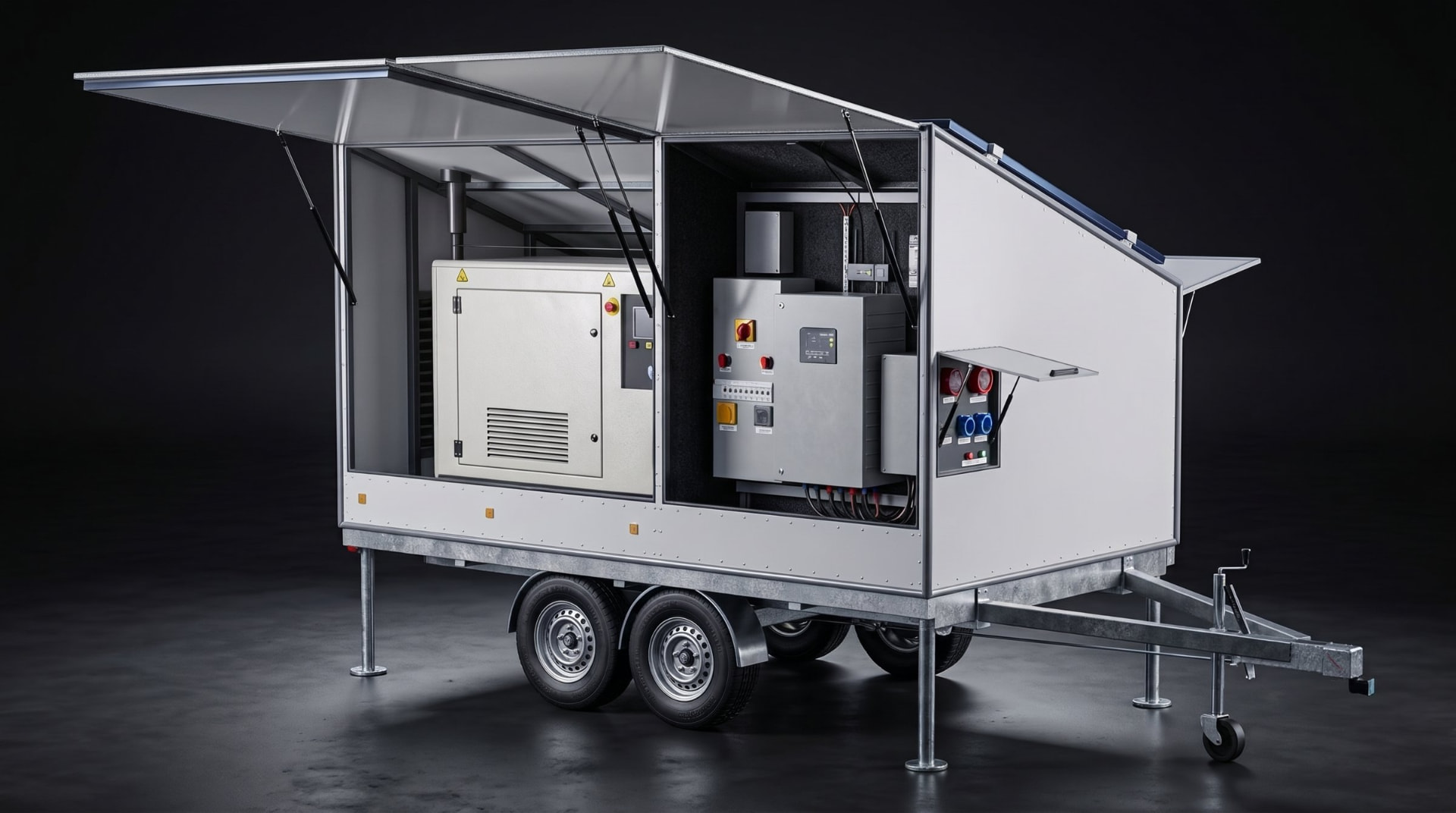
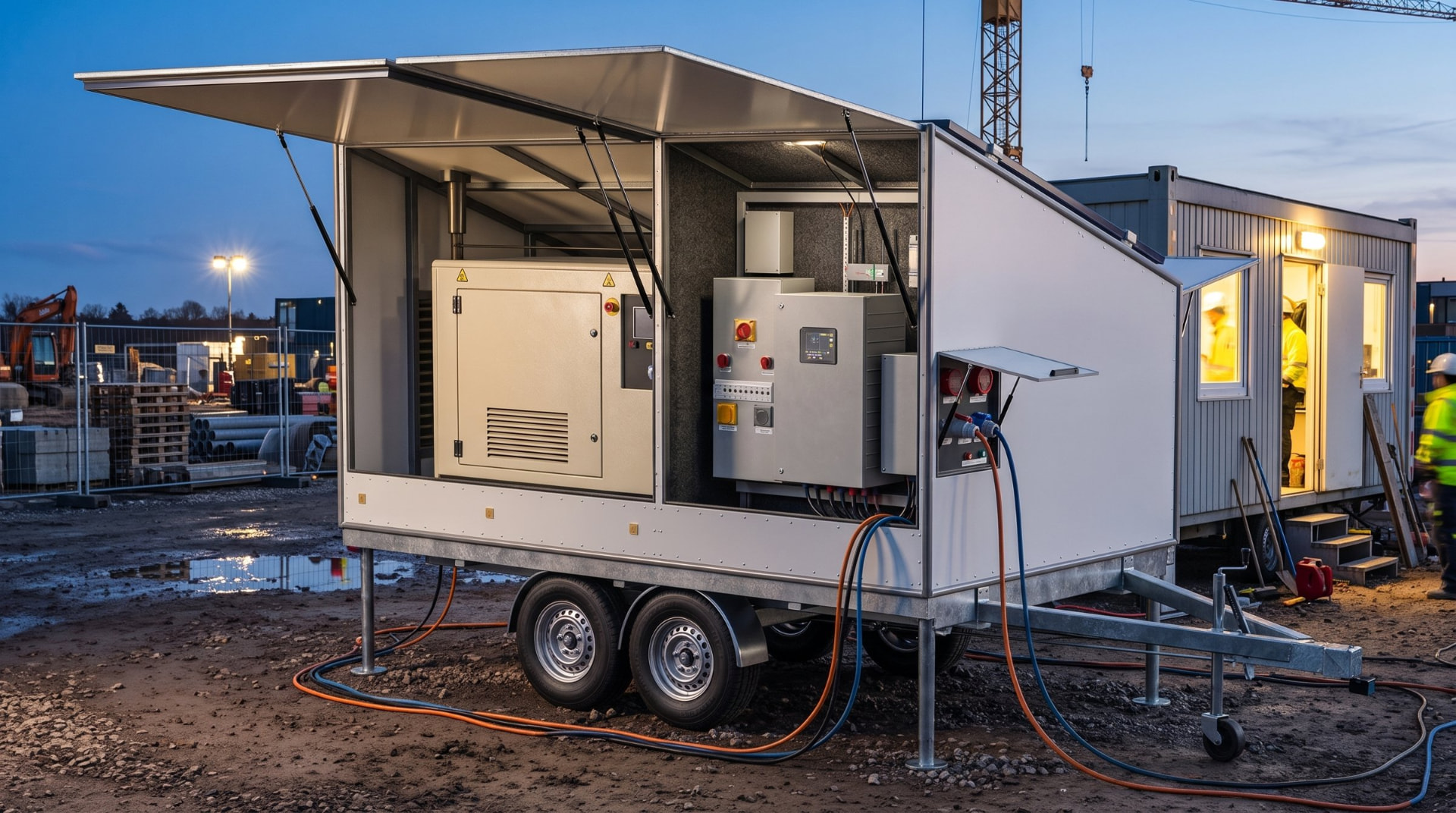
Battery, inverter, generator and solar panels in one 3.3 by 1.8 metre body, on a trailer under 2,000 kg.

02 / 09

Look inside.

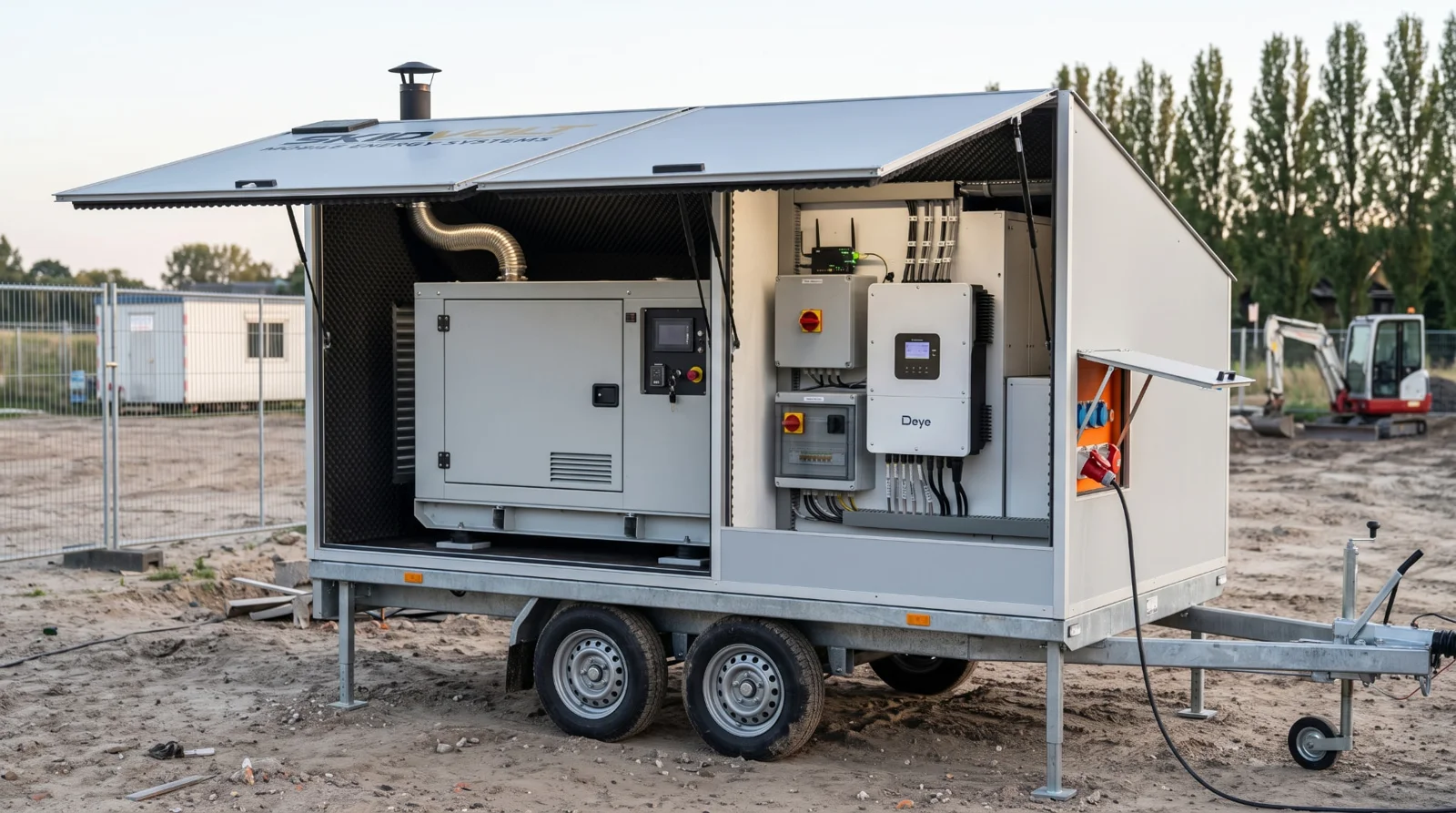
The generator on the left, the electronics and batteries on the right, with a sound-insulated partition in between. Everything has its own hatch.

03 / 09

The battery does the work.

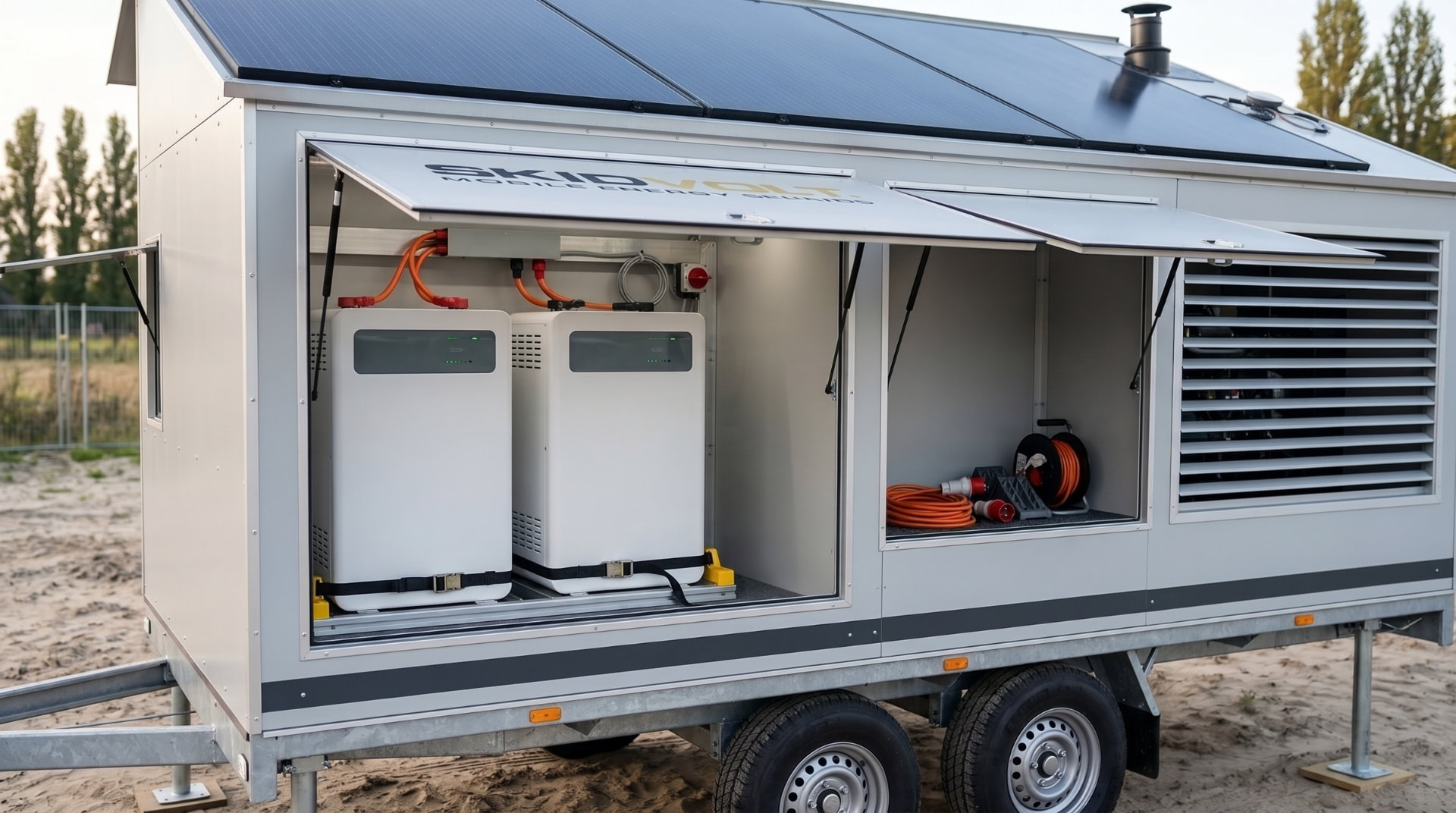
A 32 kWh LiFePO4 battery. Everything you connect runs on it: quietly, with no emissions where people work.

04 / 09

Need more? Two packs.

The SKID-64 has two removable packs. The rail slides along, so the nose weight stays right.

05 / 09

The generator only recharges.

When the battery runs low, the generator starts, recharges it and switches itself off. HVO100 only. About 7 out of 24 hours.

06 / 09

The roof helps out.

Three solar panels recharge the battery during the day, without fuel.

07 / 09

Connect what you already have.

CEE 400 V and 230 V behind a flap at the front. If the controls fail, a manual bypass keeps the power on.

08 / 09

Hassle-free maintenance.

The generator comes out in one piece, with a forklift through the large hatch. We handle maintenance, you don't have to keep track of anything.

09 / 09

Turn it yourself.

Drag to rotate it. Or request a quote and come and see it for real in Twente.
01 / Animation

See it work

Play the animation and watch a day on a construction site: the sun charges, the battery supplies power and the generator only helps out when needed.

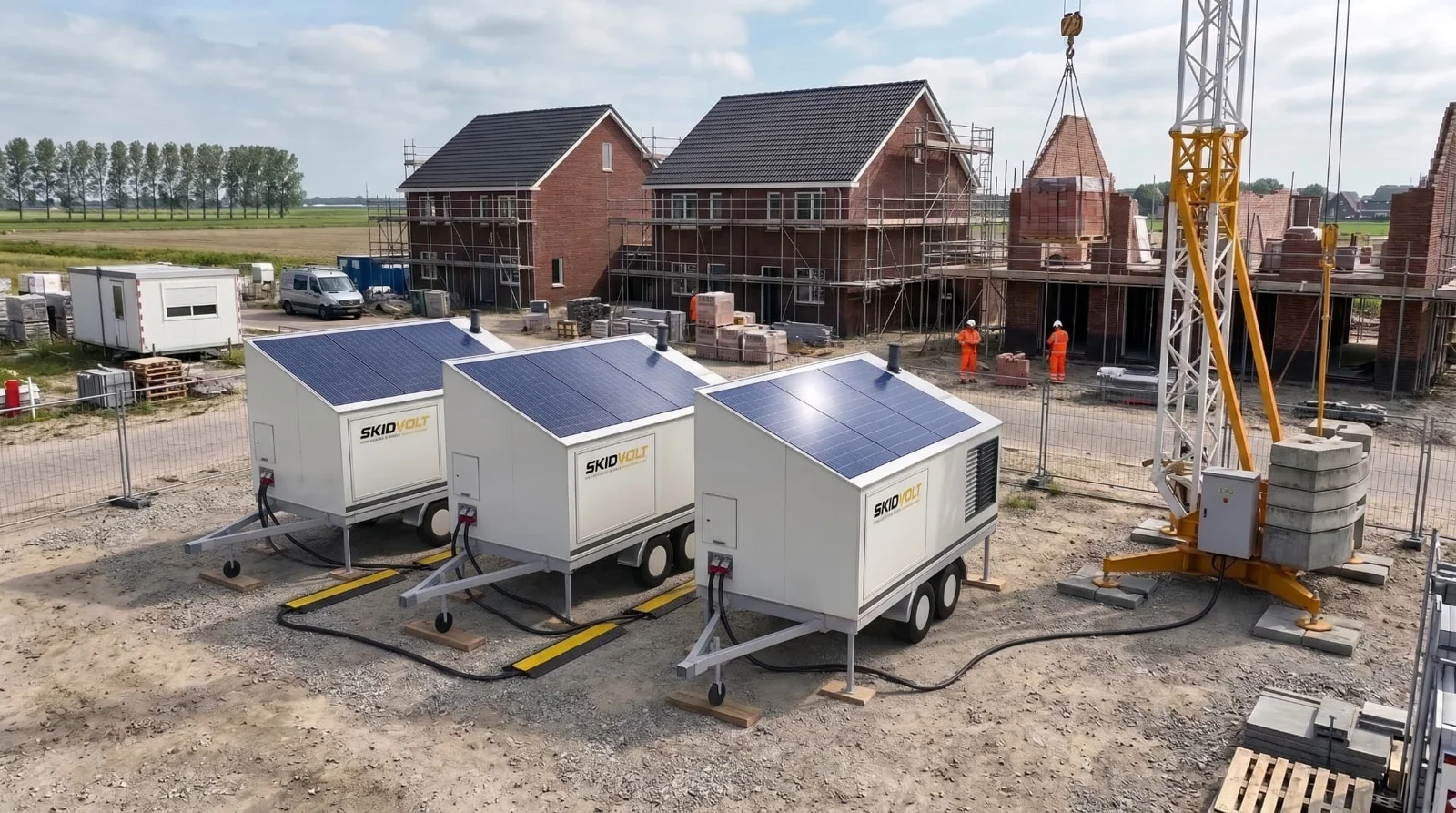
Skidvolt next to a site cabin in the evening
02 / 3D

View it from every angle

Rotate, zoom and open the hatches. Click on a component for details.

Skidvolt interior
03 / Three modes

Three modes

1 / Standard

Hybrid

The battery supplies power. The generator only starts when needed.

2 / Full reserve or backup power

Always full

The generator keeps the battery full, so the full reserve is always available.

3 / Generator off

Emission-free

Battery and solar only. Charge the battery at your premises beforehand.

04 / Monitoring

A smart EMS keeps watch

Behind every Skidvolt sits an energy management system (EMS). Via 4G you see live how it runs: consumption, battery level, running hours and alerts, per unit and per project.

Linked Skidvolt units on a construction site

Linking units

Linked units work as one system. At normal demand, one generator recharges all batteries while the others stay off. A second only starts when demand rises.

If one generator fails, another takes over.

05 / Why we built it this way

Why we built it this way

Since 1 July 2026, small consumers also join the waiting list for a grid connection.

KHN

Power without a grid connection.

Small consumers wait an average of 45 weeks for a new connection.

NOS, figures from Netbeheer Nederland

Power on day one.

A temporary 3 x 80 A site connection is too small for several electric machines. Batteries cover peak demand.

ElaadNL Outlook Bouw 2024

Covering peak demand.

From 2028, equipment below 56 kW must be emission-free in tenders issued by the agreement partners.

Berenschot, SEB agreement evaluation

Emission-free mode and usage report.

A generator running at low load for long periods develops wet stacking.

Consulting-Specifying Engineer

The hybrid principle.

LFP cells enter thermal runaway later and release much less gas than NMC cells.

Shen et al., Electronics 2023

LiFePO4 batteries.

The battery and inverter are from Deye. One brand, with components designed to work together.

Deye

One brand, readily available parts.

SKID-32 and SKID-64

Values are indicative. Drawings and the full technical description are available on request.

SpecSKID-32SKID-64
Battery32 kWh LiFePO4 from Deye64 kWh LiFePO4 from Deye (2 x 32 kWh removable, approx. 58 kWh usable)
Inverter20 kW three-phase, from Deye20 kW three-phase, from Deye
Battery and inverter brandOne brand, readily available partsOne brand, readily available parts
ConnectionsCEE 400 V and 230 V, with bypassCEE 400 V and 230 V, with bypass
GeneratorSound-insulated industrial generator, runs only on HVO100, automatic start and stopSound-insulated industrial generator, runs only on HVO100, automatic start and stop
Solar panels3 as standard3 as standard
Body3000 x 1800 mm, approx. 2.5 m high3000 x 1800 mm, approx. 2.5 m high
TrailerTandem-axle trailer up to 2,000 kg, BE driving licenceTandem-axle trailer up to 2,000 kg, BE driving licence
RuntimeTo followApprox. 7 days at 50 kWh per day
Monitoring4G, via the EMS portal4G, via the EMS portal
Skidvolt technical components on a construction site
06 / Transport

You transport it, or we do

With one 32 kWh battery pack, you can transport it without an ADR certificate. With both packs, that certificate is required. Until your drivers have it, for up to three months, we handle transport at no extra cost. A BE driving licence is still required.

Let's see whether it fits your work.

Your contact: Joris Simons +31 6 23 18 73 60 info@skidvolt.nl